Light Up Nigeria: lighting a nation with smart solar streets
How a nationwide smart solar street lighting program is transforming safety, mobility, and grid resilience across Nigeria.
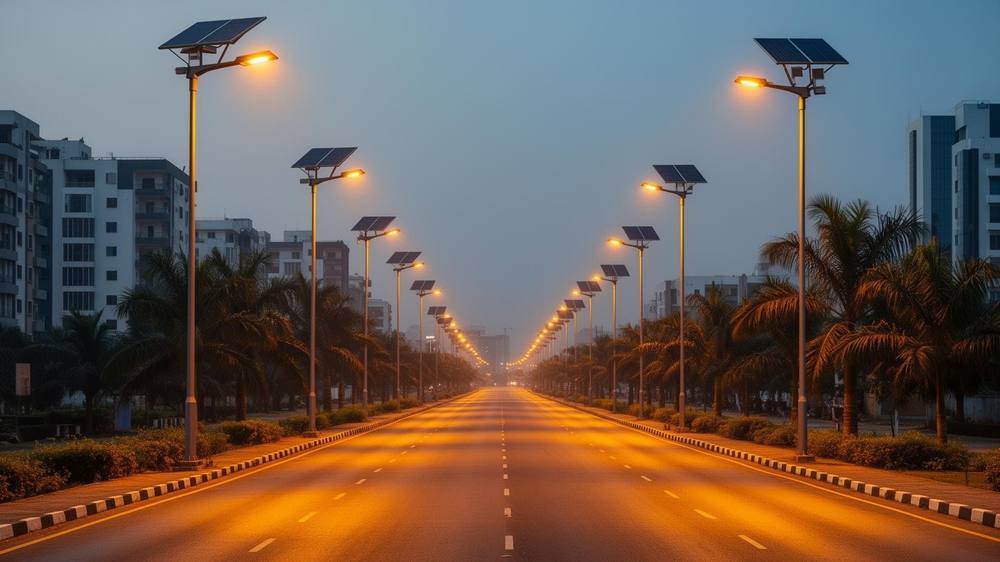
Nigeria is urbanising faster than almost anywhere on earth ... but for decades, large stretches of its roads, neighborhoods, and economic corridors have gone dark after sunset. Streetlight outages do not just inconvenience drivers; they suppress night-time commerce, slow emergency response, and create environments where road crashes and crime quietly multiply.
The Light Up Nigeria initiative reframes street lighting as critical national infrastructure rather than a cosmetic line item. Every pole is a self-contained intelligent unit ... photovoltaic panel, lithium battery, LED luminaire, motion-aware controller, and a cellular link back to a central operations dashboard. Because each unit generates and stores its own power, the system is fully independent of the grid and immune to load shedding.
Intelligence is what differentiates this deployment. Lights dim automatically during low-activity windows and brighten when pedestrians or vehicles approach, extending battery life without compromising safety. Faults are detected in real time and dispatched to the nearest maintenance crew, replacing the reactive 'wait until someone complains' model that defines most African cities.
Beyond illumination, the program lays a digital spine for the next generation of public services: smart cameras, environmental sensors, public WiFi nodes, and emergency call points can all plug into the same pole and the same back-end. What looks like a streetlight is, in fact, the first node of a nationwide IoT fabric.
Light Up Nigeria demonstrates what becomes possible when public infrastructure is designed with the same engineering discipline as industrial systems. Replicated state by state, and across the wider continent, the same model can deliver safer roads, lower fatalities, longer commercial hours, and a foundation for smart-city services ... without waiting for the grid to catch up.