Case study: building a state public safety command centre
City-wide cameras, emergency call points, and a unified command room giving a state government real-time situational awareness.
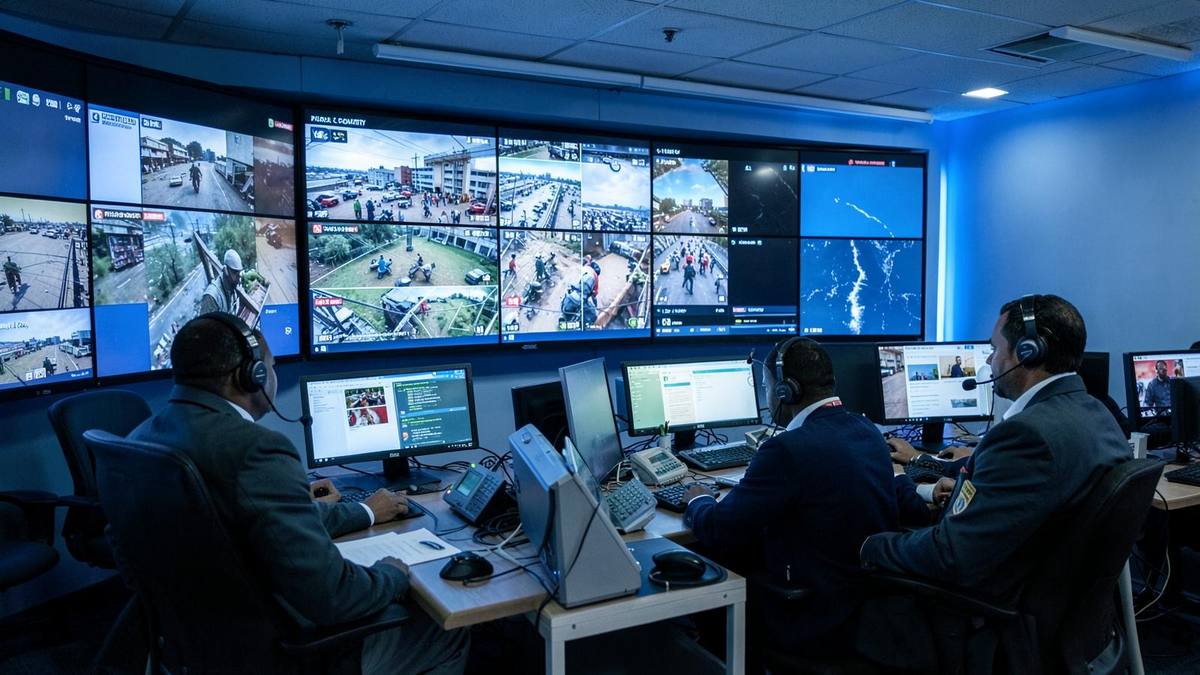
Public safety technology only creates value when the field layer and the command layer are designed as one system. Cameras without operators, or operators without dispatch authority, produce archives ... not outcomes.
This deployment combined fixed and PTZ cameras at junctions and markets, solar-backed power at every pole, a resilient fibre and wireless backhaul, and a command centre with a video wall, recording infrastructure, and integrated radio dispatch.
Analytics were kept deliberately narrow at launch ... licence plate recognition on entry corridors and crowd-density alerts in market zones ... so operators could trust the alerts they received rather than drown in them.
Governance was written into the build: retention periods, access logging, and an evidence-export workflow admissible in court.
Within the first operating quarter, the centre was coordinating multi-agency responses that previously depended on phone calls, giving the state a measurable reduction in response times across its busiest corridors.